What BIS Hallmarking Actually Guarantees When You're Buying Gold for a Child
Buying gold for a child comes with a specific kind of pressure ordinary jewellery shopping doesn't carry. It's usually tied to a milestone — a mundan, an annaprasana, a first birthday, a Rakhi — which means the piece is meant to be kept, not just worn. That makes purity non-negotiable in a way it might not be for a trend piece bought on impulse. And yet most parents buying gold for a child couldn't explain, if asked directly, what the little BIS stamp on the piece actually promises them. It's worth being precise about that, because the honest answer is narrower — and in some ways more useful — than most people assume.
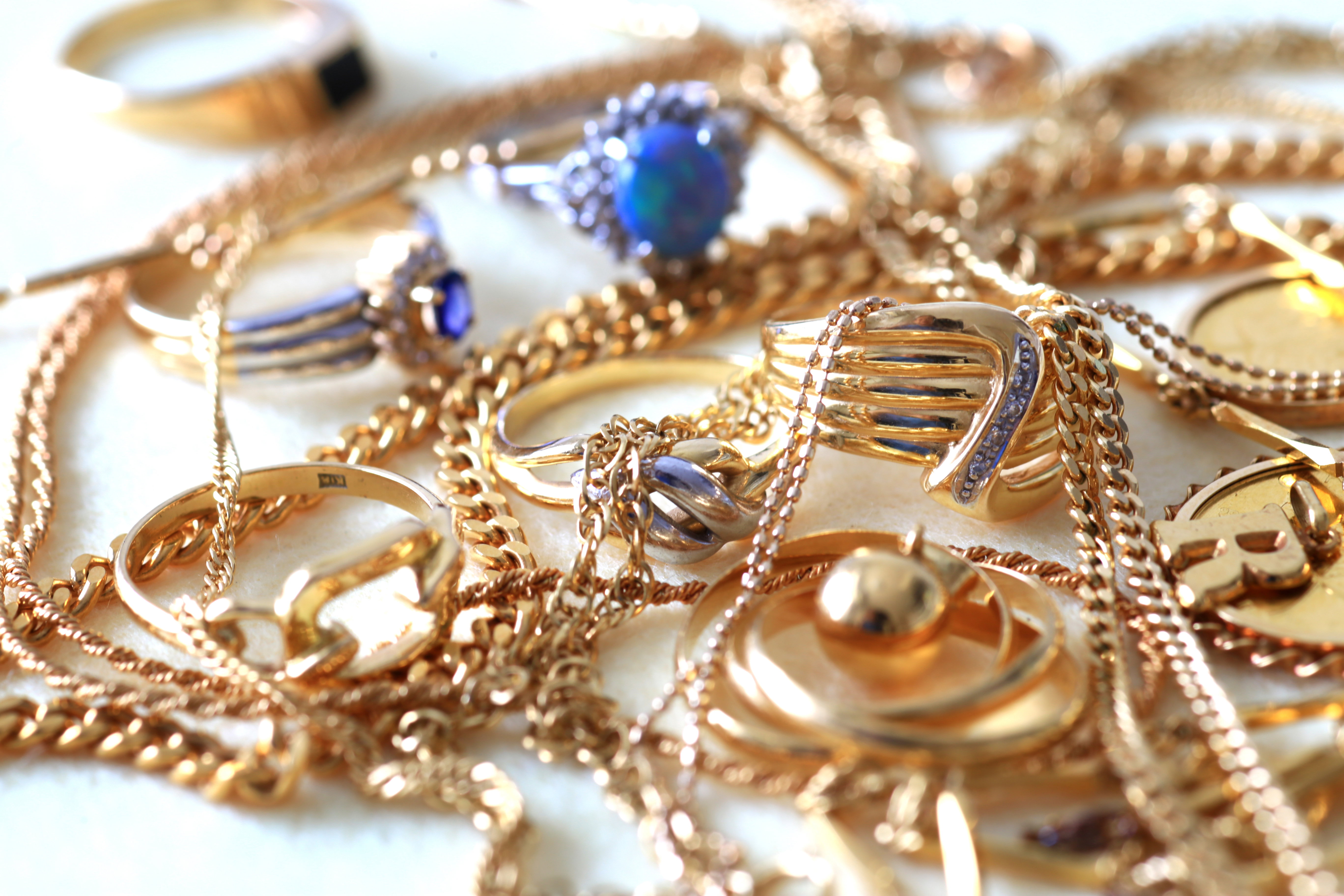
What BIS Hallmarking Actually Is
The BIS Hallmark is a certification issued by the Bureau of Indian Standards, India's national standards body, confirming that a piece of gold jewellery meets a specific, government-defined purity standard. It has been mandatory for gold jewellery and artefacts sold in India since June 2021, covering 14, 18, and 22 karat gold specifically. Before hallmarking existed and before it became mandatory, a buyer had essentially no independent way to verify that the gold they were purchasing was actually as pure as the seller claimed — purity was, in effect, taken on trust in the seller's word.
A genuine BIS Hallmark carries four distinct pieces of information stamped or lasered onto the piece: the BIS logo itself, a purity grade (such as 916 for 22 karat, or 750 for 18 karat), a six-digit HUID — Hallmark Unique Identification — code unique to that specific piece, and a mark identifying the registered jeweller. That HUID is the part most buyers have never actually used: it's individually verifiable through the government's BIS CARE app, which means a specific piece's certification isn't just a stamp you have to trust visually — it's traceable back to a real registration record.
To earn that stamp, a piece has to be tested at a BIS-recognized Assaying and Hallmarking Centre, typically using X-ray fluorescence testing or the cupellation method, both of which measure the actual proportion of pure gold in the alloy rather than relying on the manufacturer's stated specification. That testing is what separates a hallmark from a label — the number stamped on the piece has been independently measured, not merely asserted by whoever made it.
What It Guarantees: Purity, Precisely and Only
Here's the part worth being exact about: BIS Hallmarking is a purity certification. It confirms that if a piece is stamped 750, it genuinely contains 75% pure gold by weight, corresponding to 18 karat — not 70%, not "close enough," but verified against a testing standard. If it's stamped 916, it's genuinely 22 karat, 91.6% pure gold. That number is the entire promise. It is not self-certification, not a manufacturer's claim, and not a jeweller's word — it's a government-backed measurement.
That's a meaningful guarantee, and it solves a real historical problem: for a very long time, gold buyers in India had no independent, verifiable way to confirm that an 18-karat piece was actually 18-karat gold rather than a lower-purity alloy sold at a higher-purity price. Hallmarking closes exactly that gap, for exactly that question.
What It Doesn't Guarantee — And Why That Matters More With Children's Jewellery
This is the part that gets skipped over in most explanations of hallmarking, and it matters most precisely in the children's jewellery context, because a parent buying for a child is usually solving for more than purity alone.
BIS Hallmarking says nothing about the diamonds or stones set into a piece. If a gold pendant has a diamond or gemstone set into it, the hallmark only certifies the gold. It says nothing about whether that stone is natural, synthetic, or simulated, and nothing about its cut, clarity, or carat weight. A completely genuine BIS Hallmark can sit on a piece with a lab-grown or simulated stone marketed ambiguously — the hallmark simply isn't answering that question at all. A parent who wants certainty on the stone needs a separate certification entirely, such as an SGL Diamond Certificate confirming a diamond is natural and documenting its cut and carat — a different document answering a different question.
BIS Hallmarking says nothing about whether the metal is safe for a child's skin. Purity and hypoallergenic safety are not the same axis. An 18-karat gold alloy is, by definition, roughly 25% other metals — and which other metals make up that remaining alloy is not something the hallmark specifies or regulates. Nickel is a common alloying metal in some gold jewellery, and it's also one of the most common skin allergens, particularly relevant for children, whose skin tends to be more reactive than an adult's. A hallmark stamped 750 tells you the gold content is correct; it tells you nothing about whether the remaining alloy was chosen with a child's skin in mind. That's a separate design and sourcing decision a jeweller has to make deliberately — choosing hypoallergenic alloy combinations and specifically avoiding nickel-based ones — and it isn't something the certification process checks or requires.
BIS Hallmarking says nothing about craftsmanship, design, or how the piece is made. Two pieces can carry an identical hallmark — same purity, same karat — while one is mass-produced from a catalogue mould and the other is handcrafted to order by a skilled artisan. The hallmark is silent on all of that. It's a purity certificate, not a quality-of-craft certificate.
BIS Hallmarking doesn't tell you anything about sizing, comfort, or wearability for a child specifically. A clasp that's easy for an adult to manage might be genuinely difficult or unsafe for a child to use unsupervised. None of that is within the hallmark's scope either.
Why This Distinction Matters More for a Child's Piece Than an Adult's
For an adult buying their own gold jewellery, some of these gaps matter less. An adult can generally tolerate a slightly more reactive alloy without serious consequence, can evaluate craftsmanship by handling the piece, and doesn't need a stone's authenticity confirmed with quite the same anxiety a parent brings to a milestone gift. For a child's piece, the stakes on precisely the things hallmarking doesn't cover are higher: skin reactivity, genuine stone authenticity for what's often a first fine-jewellery purchase, and craftsmanship that's meant to be kept and potentially handed down rather than replaced in a few years.
That's the real, practical implication for a parent: BIS Hallmarking is necessary, but by design, it was never built to be sufficient for everything a parent buying gold for a child actually needs to know. Genuine peace of mind on a children's fine jewellery purchase comes from stacking several distinct certifications and design decisions, each answering a different question the hallmark doesn't touch — the gold's purity from BIS, the stone's authenticity from an independent gemological certificate where relevant, and the metal's skin-safety from a deliberate hypoallergenic alloy choice the maker has to actively decide on rather than something regulation requires by default.
A Few Things Worth Knowing About How the System Actually Works
Mandatory hallmarking has some exceptions that surprise people once they learn about them. Very small jewellers — those with an annual turnover under a government-specified threshold — currently fall outside the mandatory hallmarking requirement, though many choose to get certified anyway to build buyer trust. That means the absence of a hallmark isn't automatically fraud; it can also simply mean a very small operation that hasn't registered. But it does mean the absence of a hallmark removes your independent verification entirely, regardless of the seller's reason for not having it, which is exactly the situation a parent buying a keepsake piece for a child shouldn't be in.
It's also worth knowing that the HUID system is a relatively recent refinement. Older hallmarked pieces, including some still in circulation or passed down within families, may carry earlier-generation markings without an individually verifiable HUID code. That's not necessarily a red flag on an inherited piece, but for a new purchase today, the six-digit HUID and the ability to verify it independently through the BIS CARE app is the current standard, and there's no good reason to accept anything less on a piece being bought new right now.
Why the Certification Also Protects Long-Term Value
There's a practical, non-sentimental reason the hallmark matters beyond the immediate purchase: verified purity has real consequences years later, when a piece might be resold, exchanged, or used as collateral for a gold loan. Hallmarked gold is generally more readily accepted for these purposes than unmarked or ambiguously marked gold, precisely because the purity is independently documented rather than resting on the word of whoever is doing the reselling or lending at that later point in time.
For a children's piece specifically — one that's explicitly meant to be kept, grown into, and possibly passed on rather than replaced in a year or two — that long-horizon verifiability is arguably more relevant than it would be for a piece bought with a shorter fashion cycle in mind. A parent commissioning a piece today is, in a real sense, also deciding how easily that piece's value will be recognized a decade or two from now, and the hallmark is a meaningful part of what makes that recognition straightforward rather than a matter of someone else's judgment call.
What to Actually Check Before Buying
Given all of that, a parent evaluating a piece of children's gold jewellery has a genuinely short, concrete checklist, once the marketing language is stripped away:
Is the BIS Hallmark present and does it include the HUID? Check that the piece carries the logo, purity grade, HUID, and jeweller's mark — and, if you want to go a step further, verify the HUID through the BIS CARE app rather than taking the visible stamp at face value.
If there's a stone, is there a separate certificate for it? A hallmark on the gold doesn't extend to cover a diamond or gemstone. Ask specifically whether the stone comes with its own certification confirming it's natural, and from which certifying body.
Has the seller made an explicit claim about hypoallergenic metal, or are they silent on it? This is the detail most likely to get glossed over, because it isn't legally mandated the way hallmarking is. A seller who's thought about a child's skin specifically will say so plainly — which alloy components are used and which are deliberately avoided — rather than leaving it implied.
Is the piece made to order or pulled from mass inventory? Neither answer is automatically wrong, but it changes what you're paying for and what level of individual attention went into that specific piece rather than a batch.
None of this is meant to diminish what BIS Hallmarking actually does — it closed a real, historically serious problem in the Indian gold market, and a piece without one is a piece you should walk away from, full stop. But treating the hallmark as the entire answer to "is this jewellery right for my child" misreads what the certification was built to do. It answers one precise question extremely well. A parent buying for a child usually has three or four questions, and the hallmark was only ever meant to answer one of them.
